
Benefits of thermoplastic road markings for long-lasting performance
As one of the most durable materials for asphalt or road surfaces, thermoplastic striping is designed to last longer than traditional traffic paint.
How does thermoplastic striping work?
Thermoplastic material is heated to a high temperature, allowing it to bond with the road surface. Once heated, it can be applied directly to the road surface, after which it immediately begins to cure. The finished product is a durable blend of pigments, fillers, binders, and glass beads. During application, glass beads are embedded into the surface to enhance reflectivity and improve nighttime visibility.
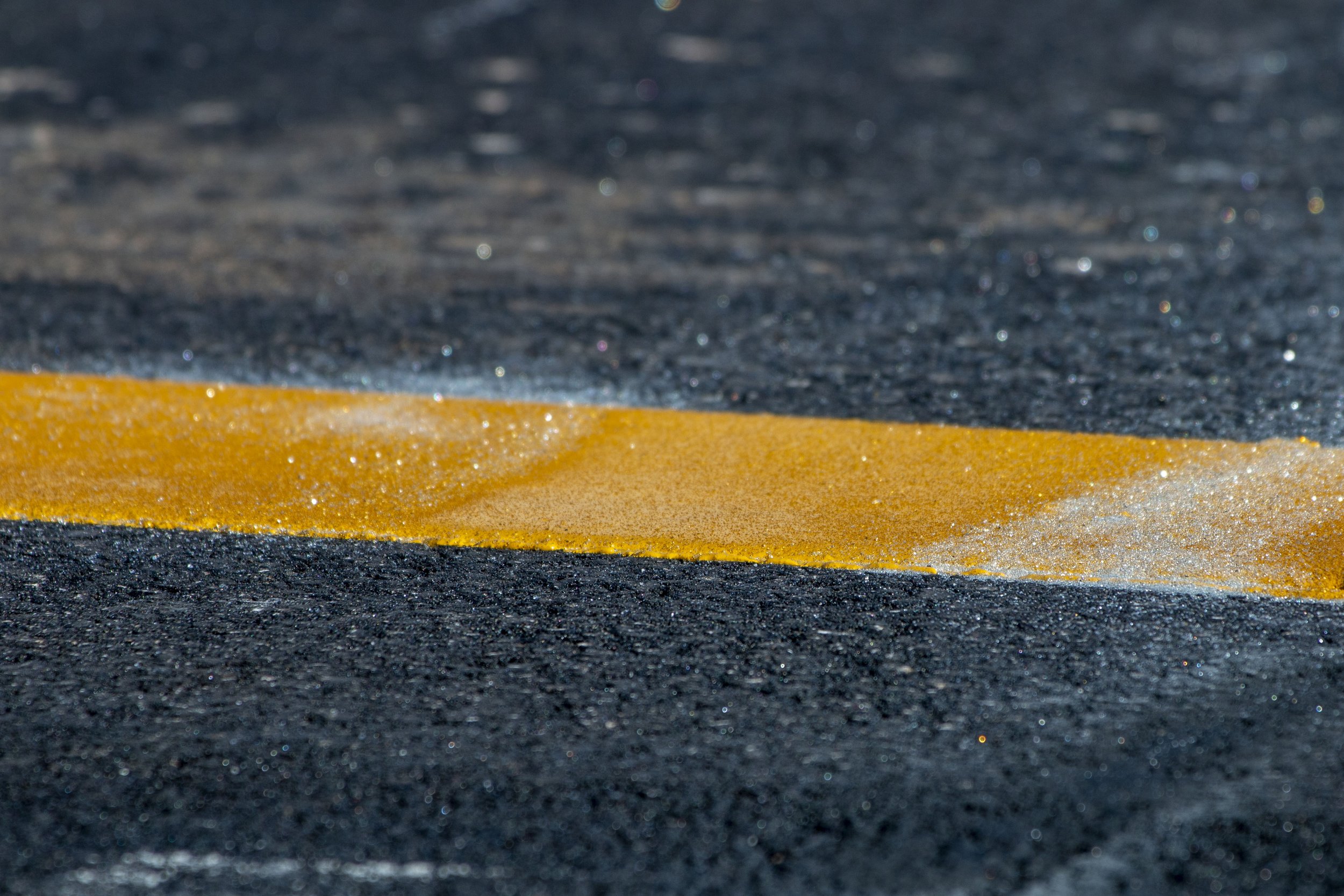
Glass beads are incorporated into the thermoplastic for enhanced reflectivity.
Taking it one step further with “perform”
Another form of thermoplastic markings come in the form of preformed thermoplastic or “preform”. This type of road marking consists of lines and elements that can be assembled into a particular shape or design.
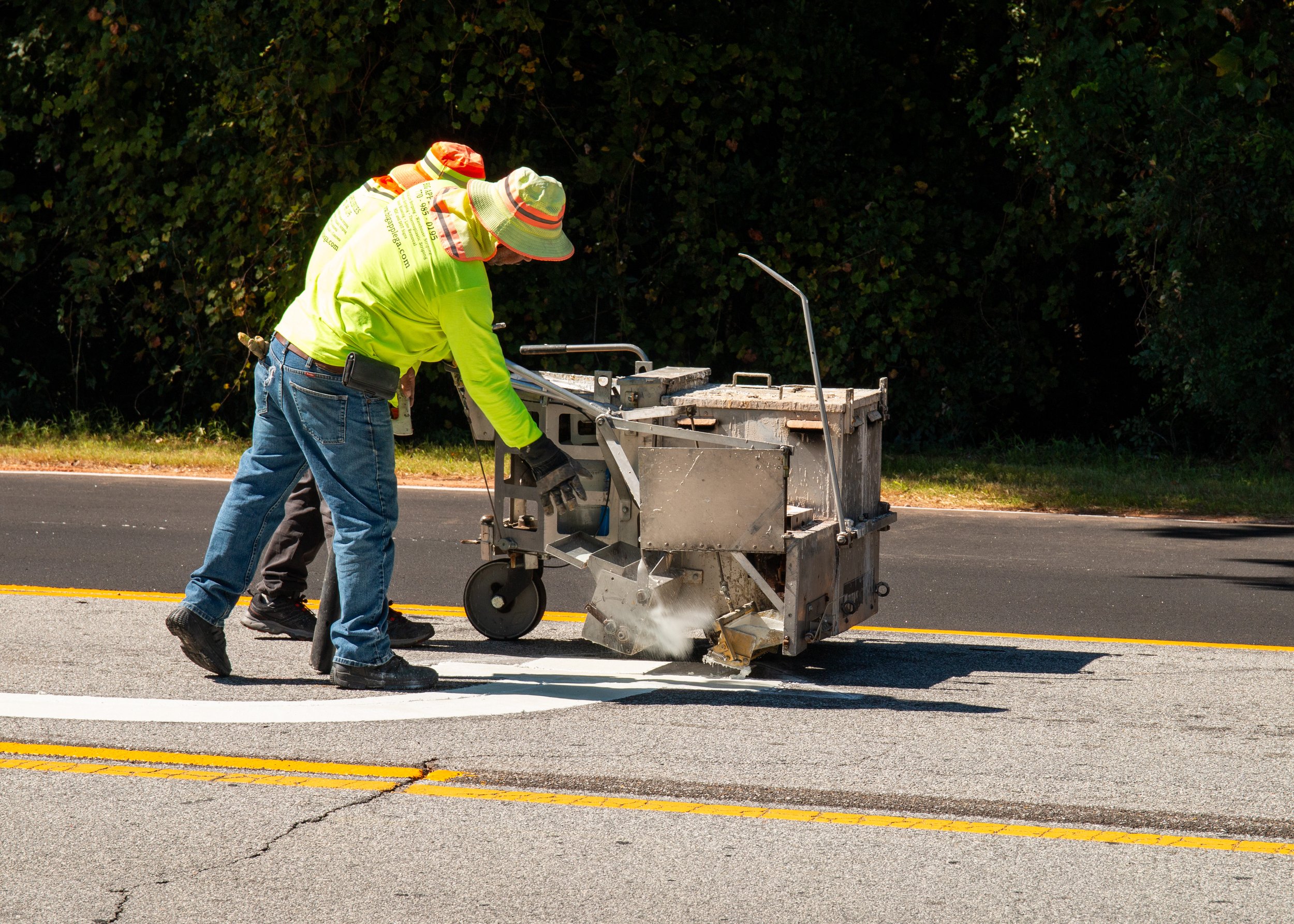
The crew working on applying thermoplastic road marking.
Preform is an excellent choice for concrete surfaces, as well as parking lots and roadways. It’s commonly used for lane lines, crosswalks, stop bars, and pavement symbols such as arrows, bicycle icons, and pedestrian markings. One of the key advantages of preform thermoplastic is its availability in a wide range of colors and sizes, all designed to meet MUTCD standards.
We also offer custom preform designs to meet your specific project needs.
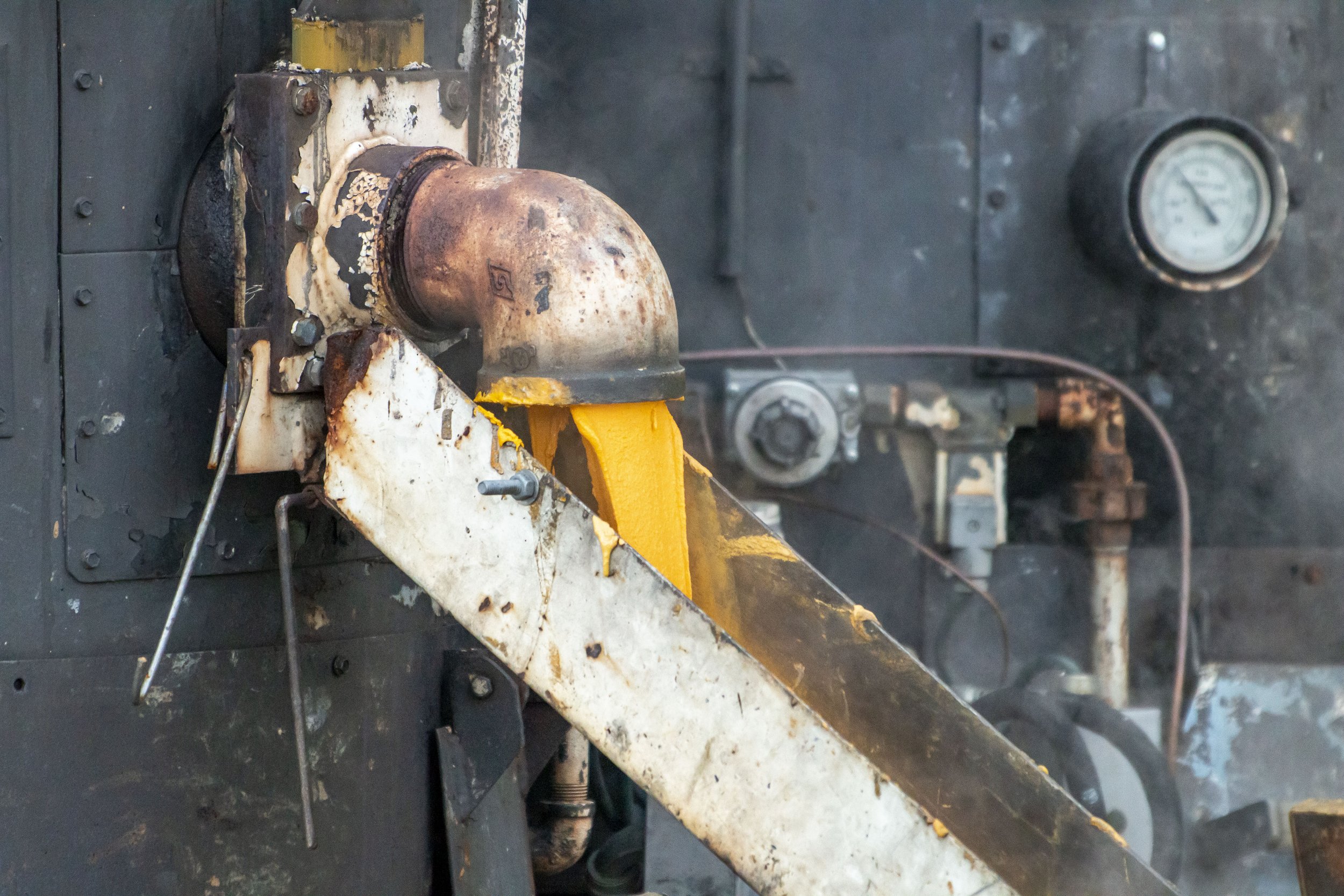
Thermoplastic kettles.
Why choose thermoplastic?
While thermoplastic striping may have a higher upfront cost than traditional traffic paint, its superior durability reduces the need for frequent maintenance over time. If thermoplastic markings ever need to be removed, we also offer professional grinding and hydroblasting services. These methods effectively remove the material while preserving the integrity of the asphalt or roadway surface.